
In vehicles, construction machinery, energy storage equipment, photovoltaic supporting equipment, generator sets and other export businesses, many cargoes carry their own batteries, electrolyte or combustible media and are very easily misjudged as general cargo. Dangerous goods export is a high-risk category under the joint supervision of customs, the maritime authority and the shipping line — it is not simply a matter of one more document. A mistake in any single link of classification, labelling, packaging or declaration can lead directly to container detention, return shipment, heavy fines, or even damage to the shipper’s credit standing. OOG over-limit energy storage cabins and battery-carrying construction equipment in particular carry the dual attributes of heavy cargo and dangerous goods, and their documentation and loading requirements are far more complex than those of ordinary project cargo.
Table of Contents
- 01What Are Dangerous Goods Under International Logistics
- 02The Full Set of Special Documents Required for Dangerous Goods Export (Customs + Maritime + Carrier)
- 03The Complete Dangerous Goods Export Workflow: Classification Appraisal → Booking → Maritime Declaration → Customs Clearance and Loading
- 04Regulatory Differences Across Transport Modes: Ocean / Rail / Trucking / Air
- 05High-Frequency Pitfalls for Energy Storage and Battery-Type Heavy Cargo (BESS, Lithium Battery Equipment)
- 06The Serious Consequences of Concealing or Misdeclaring Dangerous Goods
- 07Bloom Supply Chain Dangerous Goods Project Support Services
- 08Get a Dangerous Goods Compliance Pre-Assessment
1. What Are Dangerous Goods Under International Logistics
What we call dangerous goods in everyday speech falls into dangerous chemicals (chemical attributes, supervised by customs inspection) and dangerous goods (transport attributes, controlled by the IMDG / IATA / RID rules); the two are not entirely equivalent: some products are not dangerous chemicals, yet they count as dangerous goods under the transport standards and must still be declared as dangerous goods.
- Ocean freight follows the IMDG International Maritime Dangerous Goods Code
- Rail follows RID
- Air freight follows IATA DGR
- The maritime authority is responsible for the safe carriage declaration of ships

High-frequency categories in foreign trade and engineering scenarios:
- Class 9: lithium batteries, BESS energy storage containers, battery packs, backup power supplies (UN3480 / UN3481 / UN3536)
- Class 3: lubricating oil, diesel, cleaning agents, paints and coatings
- Class 2: compressed gas cylinders, nitrogen, argon
- Class 8: acid and alkaline cleaning agents, electrolyte
Key reminder: a battery built into a complete machine does not entitle the cargo to an automatic exemption; a classification appraisal is required to determine whether the goods count as dangerous goods.
2. The Full Set of Special Documents Required for Dangerous Goods Export (Customs + Maritime + Carrier)
| Document | Description |
|---|---|
| MSDS (Material Safety Data Sheet) | Chinese and English versions. The foundation of all the other documents, stating composition, hazards, emergency response, UN number and hazard class; shipping lines, customs and the destination port all verify it. |
| Hazardous Properties Classification Appraisal Report / Transport Appraisal Report | Issued by a qualified third-party laboratory to determine whether the goods are dangerous, the UN number and the hazard class; it is the prerequisite document for customs inspection declaration and for the maritime declaration. |
| Dangerous Goods Packaging Certificate (Result Sheet of Appraisal on the Use of Packaging for the Transport of Dangerous Goods for Export) | Used together with the packaging performance certificate to prove that the packaging structure and strength are suitable for dangerous goods transport, and is a core document for customs inspection release; bulk cargo and goods under rule exemption are excluded. |
| UN38.3 Test Report (mandatory for lithium batteries) | Exclusive to lithium batteries and energy storage batteries, proving that the battery has passed impact, crush, high and low temperature and other safety tests; required by the vast majority of shipping lines and overseas destination ports; reports for different UN numbers cannot be used interchangeably. |
| Declaration of Conformity of the Producer of Export Dangerous Chemicals | Submitted at the time of the dangerous chemicals inspection declaration and issued by the producing enterprise, declaring that the product complies with domestic and international specifications. |
| DG Dangerous Goods Declaration Form | The core document of the maritime declaration, submitted by a certificate-holding “two-person” declarant; entry to the port and loading on board are permitted only after maritime approval. |
| Labels, marks and marine pollutant markings | Not paper documents, but statutory inspection items: hazard pictogram labels, UN number marks and marine pollution marks must be applied in accordance with the rules on both the outer packaging and the container body. |
Additional: some countries impose extra requirements, such as EU battery regulation documentation, PSE, UL, and filing documents for the local import responsible person.
3. The Complete Dangerous Goods Export Workflow: Classification Appraisal → Booking → Maritime Declaration → Customs Clearance and Loading
- Up-front pre-assessment: establish what the cargo is first — confirm whether it is dangerous goods, the UN number and the hazard class; do not book space first and supplement the appraisal afterwards.
- Process the full set of testing and packaging documents (UN38.3 test report, MSDS / SDS safety data sheet and transport appraisal report; a dangerous goods packaging certificate is also required if the cargo is shipped regularly by sea as dangerous goods).
- Apply for DG space from the shipping line’s dangerous goods space department, submit the full set of documents for pre-review, and have the line confirm the stowage plan (on deck / under deck, segregation requirements).
- Truck the cargo into the dedicated dangerous goods yard; it cannot be stacked together with ordinary general cargo.
- Maritime declaration (cargo declaration + ship declaration), submitted within the prescribed time limit to obtain maritime release.
- Customs inspection declaration + customs declaration; customs verifies the dangerous chemicals documents, the packaging and the labels.
- Inspection (random) and release, then loading on board at the stowage position designated by the shipping line.
- The bill of lading and the manifest must truthfully state the UN number and the hazard class; they cannot simply describe the cargo as “machinery and equipment”.
Time red line: the maritime declaration generally requires approval to be completed 24 hours before sailing; a late declaration means the cargo simply cannot be loaded, generating port storage losses.
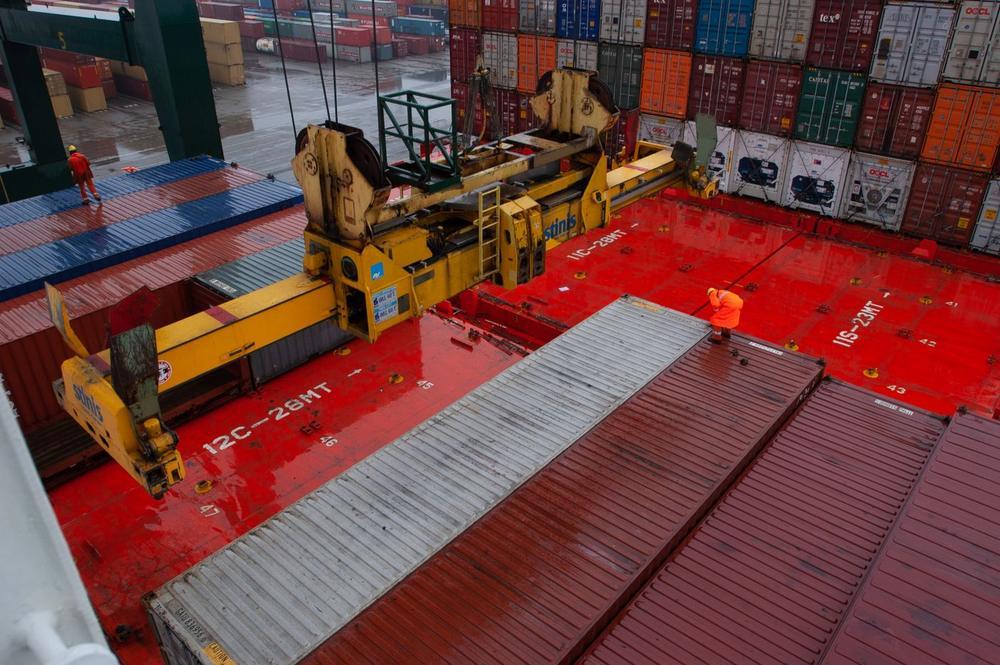
Core certification and testing documents
UN38.3 test report: all lithium cells and batteries must pass the 38.3 test of the United Nations Manual of Tests and Criteria; this is the mandatory “passport” for international transport.
MSDS / SDS (Material Safety Data Sheet): explains the chemical properties and emergency information of the product and must comply with the eleventh revised edition of the UN GHS standard; it is the standing documentation for customs clearance and logistics declaration.
Transport appraisal report: issued by a qualified institution to confirm whether the cargo is carried as general cargo or as dangerous goods; air freight usually requires the Air Transport Conditions Appraisal Report.
Packaging and compliance certificates
Dangerous goods packaging certificate: if the cargo is exported by sea as dangerous goods in the regular way, a performance certificate and a use certificate are required; however, some equipment with built-in batteries (such as electric vehicles and balance scooters) can be exempted from the dangerous goods packaging certificate under specific conditions and can move in a dangerous goods container on the strength of UN38.3 and MSDS alone.
IEC62133 certification: the core safety and quality threshold for entering markets such as the EU and Japan; although it is not mandatory for transport, it is an important support for product compliance.
4. Regulatory Differences Across Transport Modes: Ocean / Rail / Trucking / Air
| Transport mode | Regulatory rules | Key points |
|---|---|---|
| Ocean freight (IMDG) | Widest application | Energy storage cabinets under UN3536 mostly require on-deck stowage, segregated from other dangerous goods |
| International rail (RID) | Limited dangerous goods routes on the China-Europe Railway Express | Many terminals do not accept Class 9 batteries, so route qualifications must be confirmed in advance |
| International trucking TIR | Road dangerous goods regulations | Strict requirements on packaging, trailer qualifications and on-board emergency documents |
| Air freight (IATA) | Highest threshold | Separate clauses for lithium batteries with many limits on power and cells; many high-power energy storage devices are not suitable for air freight |
For the same dangerous goods, the rules, labels and exemption clauses differ from one transport mode to another; a single set of documents cannot be used across all channels.
5. High-Frequency Pitfalls for Energy Storage and Battery-Type Heavy Cargo (BESS, Lithium Battery Equipment)
Misconception: An energy storage cabinet is just equipment; the battery inside is built in, so it can move as general cargo.
Correction: The UN3536 energy storage container is a Class 9 dangerous good; concealment is a key target of maritime enforcement, and detection leads directly to container detention and heavy fines.
Misconception: UN3480, UN3481 and UN3536 can share a single UN38.3 report.
Correction: The numbers correspond to different product forms, the report must match one to one, and mixed use leads directly to return shipment.
Misconception: Once the dangerous goods packaging certificate is in hand everything is settled, and the labels can be applied however you like.
Correction: Label size, position, colour and whether a marine pollutant mark is required are very strictly checked by the terminal and the maritime authority; labels that are blurred or wrongly applied are equivalent to a non-compliant declaration.
Misconception: OOG flat rack dangerous goods are stowed in the same way as ordinary DG containers.
Correction: With the dual attributes of out-of-gauge dimensions and dangerous goods, the shipping line assesses stability, segregation and lifting plans separately, and many shipping lines do not accept heavy-lift dangerous goods.
Misconception: If the cargo is compliant domestically, the destination port will certainly release it.
Correction: The UAE, Africa, Southeast Asia and individual EU countries have independent market access regulations for batteries and dangerous chemicals, so destination-port special documents must be pre-reviewed in advance.
6. The Serious Consequences of Concealing or Misdeclaring Dangerous Goods
Many foreign trade enterprises hold on to the hope of a lucky break and declare battery-carrying equipment and energy storage cabinets as general cargo, saving a little freight in the short term while taking an extremely high risk:
- Terminal / maritime inspection leads to direct container detention, generating enormous storage fees, container rental and port-change costs;
- the shipping line imposes a heavy concealment penalty, blacklists the shipper and no longer accepts cargo from that shipper afterwards;
- administrative penalties from customs and a downgrade of enterprise credit, affecting all subsequent customs declarations;
- in the event of fire or leakage during the voyage, the shipper bears full civil and criminal liability.
7. Bloom Supply Chain Dangerous Goods Project Support Services
We have long handled exports of energy storage containers, battery-carrying construction equipment and OOG heavy-lift dangerous goods, and are familiar with the dangerous goods control requirements of ocean freight, rail and trucking across multiple channels:
- Pre-shipment pre-assessment: distinguish general cargo from dangerous cargo, determine the UN number and hazard class, and set out the appraisal and testing plan.
- End-to-end documentation coaching: MSDS, transport appraisal, UN38.3, dangerous goods packaging certificate and declaration of conformity materials.
- Dangerous goods space coordination: pre-review with the shipping line’s DG department, confirmation of the stowage plan, and evaluation of flat-rack / break-bulk solutions for heavy-lift dangerous goods.
- Maritime DG declaration and coordinated customs declaration and inspection, with certificate-holding two-person declarants controlling declaration timeliness.
- Guidance on labelling, container packing and securing standards, adapted to OOG over-limit energy storage cabinets and construction vehicles.
- Advance compliance reminders for the destination port, matching local battery and dangerous chemicals market access rules in advance.
- Follow-up of inspection contingency plans, assisting with communication with laboratories, the maritime authority and customs.
The core logic of dangerous goods export: determine the nature first, then handle the documents, then book space, and finally declare. Compliance does not add cost — it stops one shipment from swallowing the profit of an entire order. If you have energy storage equipment, battery-carrying construction machinery or chemical supporting export projects, you can complete a dangerous goods compliance pre-assessment with us in advance.
Submit your cargo type, UN number (where applicable), transport mode and destination country to receive a free dangerous goods compliance pre-assessment and quotation evaluation.