Bloom Supply Chain
Many heavy equipment exporters base their judgement solely on a vessel’s theoretical crane specifications, while overlooking destination port infrastructure, the boundaries of the service scope and hidden surcharges — and end up running into problems on their projects. Even where a ship’s crane is theoretically capable of lifting the load, destination ports in the Middle East and Africa do not necessarily have the conditions to discharge it.
Our company holds an NVOCC licence and focuses on the export of buses, wheeled and crawler construction machinery and power generation equipment from China. This article is a deliberately technical blog post: it sets out a clear service scope, verified technical parameters, port infrastructure constraints, budget references and a pre-booking technical review checklist, to help EPC contractors and equipment manufacturers complete their own screening before formally requesting a quotation.
Further reading: Vehicle Shipping Workflow; Machinery Handling Workflow; Energy Equipment Workflow
I. Complete Service List: Standard Services vs. Value-Added Services
Standard Services — Included in the Base Quotation
- Space booking and space guarantee: confirmation of space on Ro-Ro, break-bulk/heavy-lift, flat rack and standard container services
- Export customs declaration and basic documentation: export declaration, cargo manifest and preparation of basic ocean shipping documents
- Domestic inland transport, factory loading supervision and sea-worthy lashing and securing: transport from the factory to the port of loading, on-site loading supervision and lashing that complies with ocean freight standards
- Coordinated handover at the destination terminal: liaison with the discharge port terminal and assistance with discharge operations
- End-to-end visual tracking: updates at each node from pick-up and loading through voyage to arrival, with photographic and video evidence
Value-Added Services — Selected by the Customer as Required and Billed Separately
- Compliance consultation and pre-review for the target market: pre-shipment review of certifications such as SASO, SONCAP and G-Mark
- ATA Carnet processing and temporary export logistics for exhibitions
- Letter of credit (L/C) document review and documentary compliance support
- Consultation on lithium batteries in new energy vehicles as dangerous goods, and submission of IMDG declarations
- Cargo insurance services
Important notes:
- Acceptance of an ATA Carnet depends on the policy of the destination country and on the validity limits for temporary export; some Middle Eastern and African countries have limited acceptance of ATA Carnets or do not recognise them at all;
- Obtaining official import certificates at the destination port is the responsibility of the importer or of a third party. We can assist with coordination as a value-added service and provide a document pre-review reminder before shipment; the issuance of product certifications must be carried out by the locally authorised issuing body.
II. Carriage Specifications, Port Coverage and Sailing Frequency
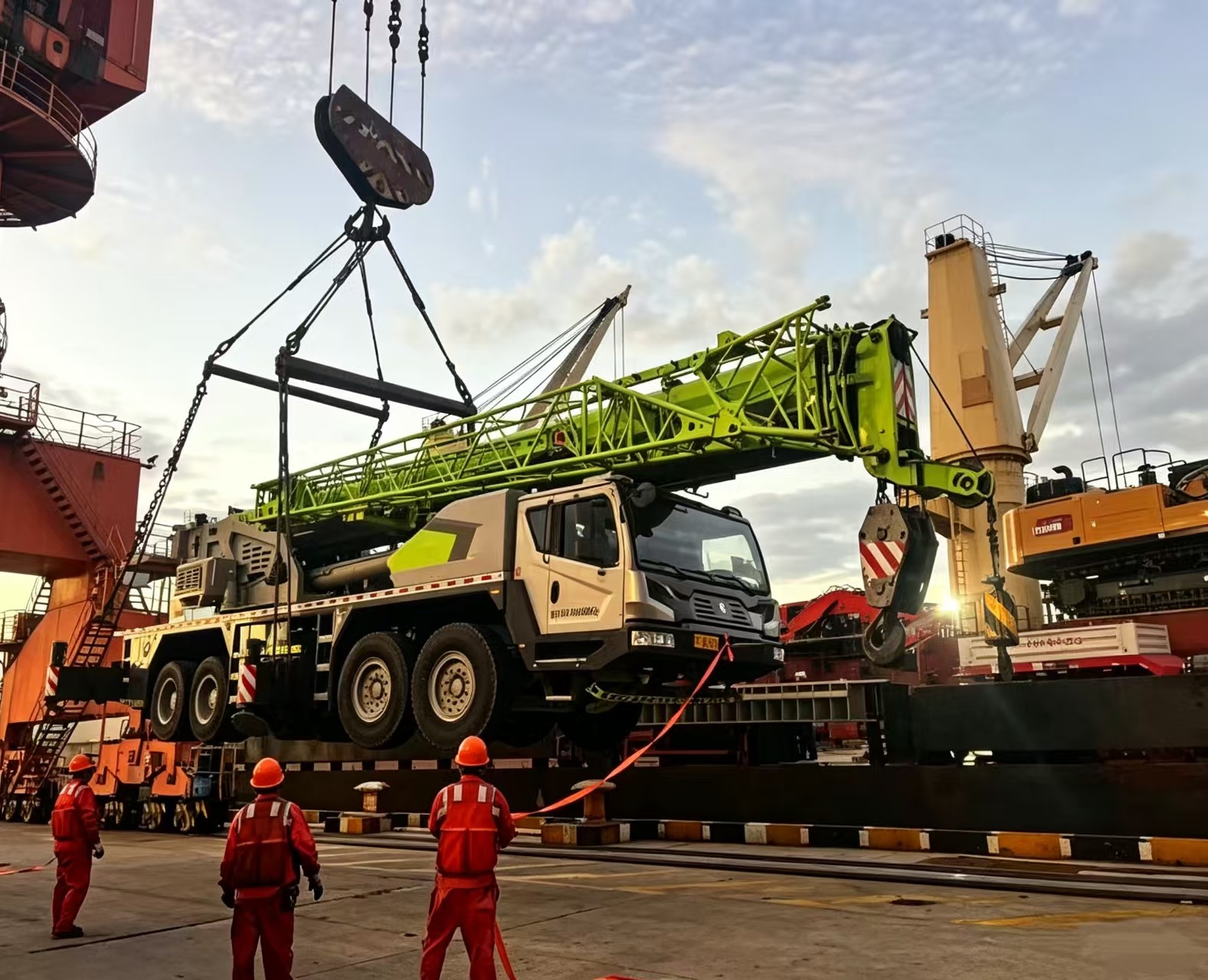
Industry critical reminder: vessel crane capacity ≠ the actual loading and discharge capability of the destination port terminal. Even if a ship’s crane can lift a given weight of cargo, the cargo still cannot be handled if the destination port terminal has no matching shore crane, floating crane or berth strength. Every heavy or oversized unit must therefore be verified twice over: vessel capability + the terminal hardware capability at both the port of loading and the port of discharge.
Maximum Weight and Dimensions Accepted per Unit
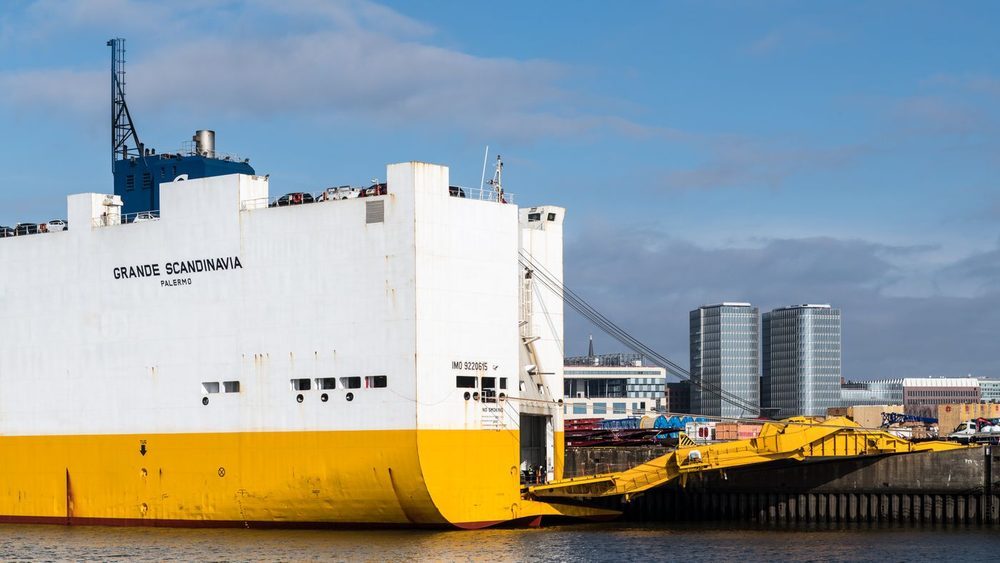
Ro-Ro vessel: constrained by deck load per unit area, the rated load of MAFI trailers and the dimensions and load-bearing capacity of the terminal ramp. Suitable for self-propelled and towable equipment; crawler equipment must use MAFI trailers — driving directly up the ramp is prohibited, as it damages the terminal surface.
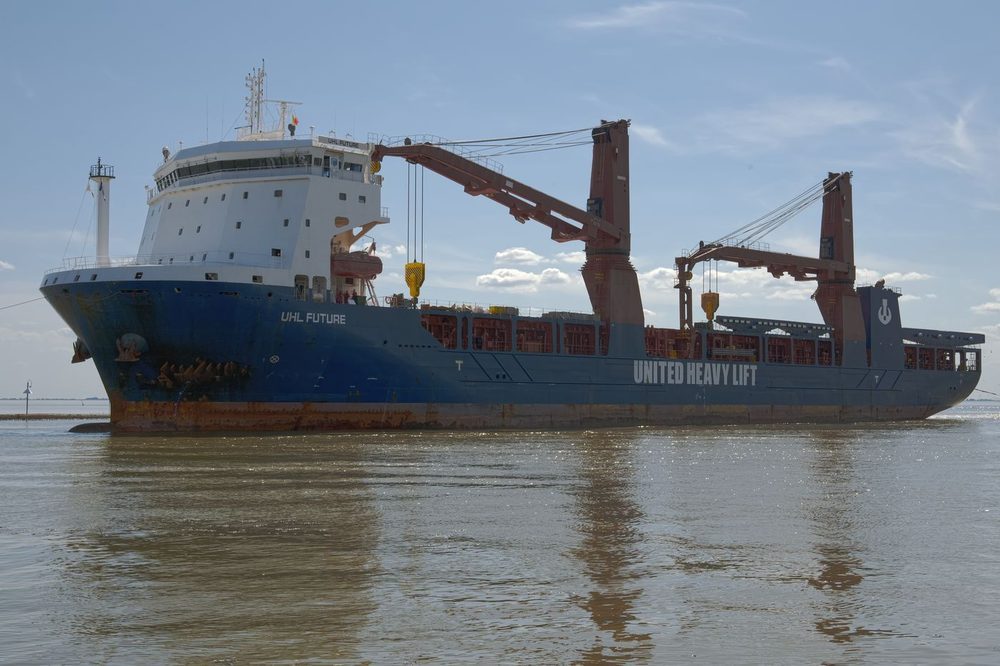
Break-bulk vessel: a conventional break-bulk vessel lifts 80–150 tonnes on a single crane and 160–300 tonnes with a twin-crane tandem lift. Tandem lifting is available on only a few specialised vessels and places extremely high demands on the terminal conditions at both the port of loading and the port of discharge. Where a heavy-lift or large shore-crane terminal is available, there is almost no hard limit on length, width or height. Preferred where the load exceeds flat rack capacity.
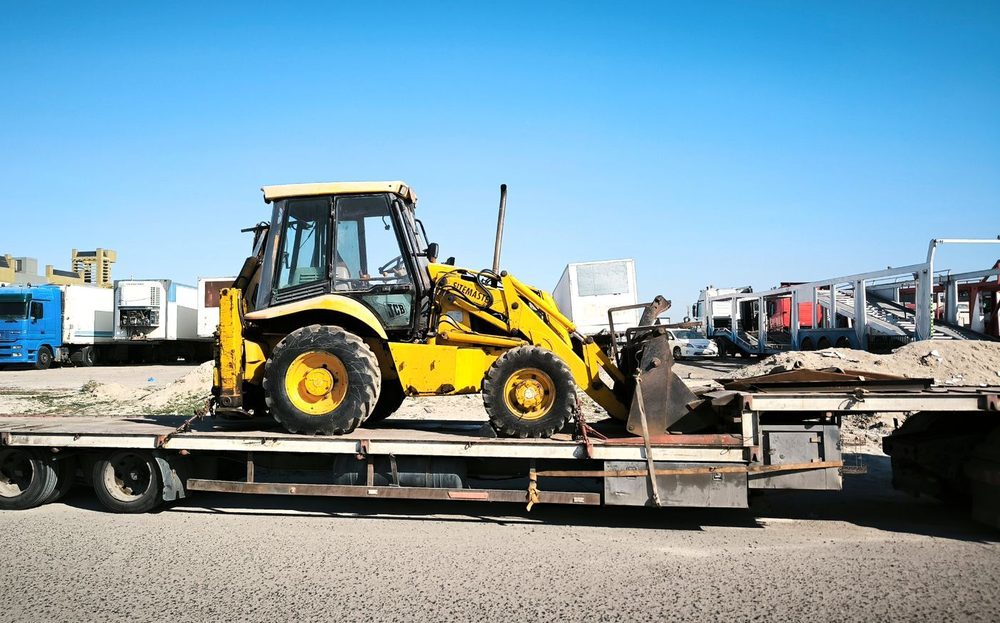
40 ft flat rack (OOG): the nameplate rating per container is 45 tonnes; allowing for frame stress and terminal handling, the safe upper limit in practical operations is 40 tonnes, subject in each case to the equipment load approval of the booking carrier, the port of loading and the destination port terminal. The base container is 11.98 m × 2.35 m, and over-length, over-width and over-height spill is permitted.
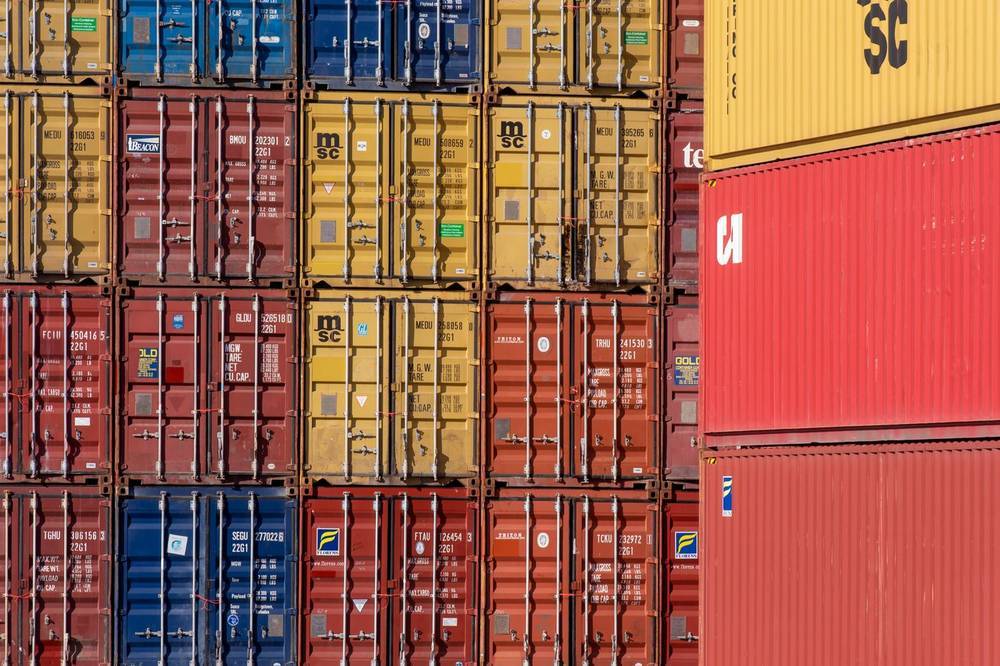
Standard 40HQ high cube: maximum gross weight 28.6 tonnes; the realistic operating limit on most liner services is 26–27 tonnes, 25 tonnes on some African routes and 26.5 tonnes on deep-sea routes. The weight limit approved on the carrier’s manifest takes precedence over the container nameplate. Internal dimensions L 12.03 m × W 2.35 m × H 2.69 m. Equipment usually needs protruding parts such as mirrors and bumpers removed.
Reference Weight Ranges for Typical Carrying Categories
- City buses and coaches: 12–22 tonnes per unit
- Wheeled construction machinery (wheel loaders, truck cranes): 15–45 tonnes per unit
- Crawler excavators and heavy mining machinery: 30–75 tonnes per unit
- Diesel generator sets and transformer power equipment: 5–60 tonnes per unit
Note: the above covers only machine types commonly seen on the market; individual special-purpose models will fall outside these ranges, and the actual measured data of the customer’s equipment must prevail.
Ports of Loading and Key Destination Ports
Ports of loading in China: Shanghai, Ningbo, Qingdao, Tianjin, Guangzhou, Shenzhen
Core destination ports by region
- Middle East: Jebel Ali (UAE); Jeddah / Dammam (Saudi Arabia); Shuwaikh (Kuwait); Sohar (Oman)
- East and West Africa: Mombasa (Kenya); Dar es Salaam (Tanzania); Apapa / Tin Can Island (Nigeria); Tema (Ghana)
- Europe: Hamburg, Antwerp, Rotterdam, Le Havre
- Southeast Asia: Laem Chabang (Thailand); Port Klang (Malaysia); Ho Chi Minh City (Vietnam); Singapore
Note: secondary and smaller ports have no Ro-Ro ramp and no heavy-lift crane, so cargo must be transhipped via a hub port, which increases transit time and handling costs.
Overview of Sailing Frequency
- Ro-Ro on the main trade lanes: weekly to the Middle East; fortnightly to the main African hubs; remote destination ports require transhipment.
- Break-bulk vessels: chartered on an irregular basis with no fixed weekly sailing; affected by cargo consolidation, the lead time is typically 3–6 weeks.
- Flat racks and standard container liner services: multiple sailings per week on the main trade lanes.
III. Project Cargo Cost Structure Reference (For Budgeting Only, Not a Quotation)
Disclaimer: the percentages are used solely for project budget planning and do not constitute a formal quotation; the final price fluctuates with the cargo, the route, peak and off-peak seasons and terminal conditions, and is not contractually binding.
| Cost item | Reference share of the total logistics budget | Additional cost risk warnings |
|---|---|---|
| Ocean freight (Ro-Ro / break-bulk / flat rack / container) | 40–60% | Spot space premiums in the peak season for Ro-Ro and break-bulk; general break-bulk cargo is charged on W/M, whichever is the greater |
| China domestic leg: trucking, loading supervision, lashing and securing, export customs declaration and documentation | 12–20% | Complex factory loading conditions and special securing increase labour costs |
| Terminal handling charges at the port of loading and the port of discharge | 8–15% | Over-dimensional (OOG) flat racks incur substantial surcharges; heavy-lift equipment is billed separately at both terminals for heavy or oversized units |
| Value-added services (if selected: certification pre-review, ATA, dangerous goods declaration, warehousing) | 5–18% | Incurred only where the customer selects the value-added items |
| Destination port services: import coordination, inland transfer after discharge | 10–22% | The further the inland destination, the higher the cost; over-dimensional inland transport in the Middle East and Africa requires additional road permits. |
| Cargo insurance (purchased separately) | 0.3–1.5% of cargo value | Rates fluctuate with the geopolitical risk of the route and the value of new or used equipment |
Common Scenarios That Generate Unplanned Additional Costs
- Incorrect declared dimensions, weight or centre of gravity for break-bulk / flat rack cargo → dead freight charges or even refusal to load
- OOG (over-dimensional) surcharges levied at the port of loading / port of discharge
- Peak-season spot space premiums on Ro-Ro / break-bulk vessels
- Extra labour to dismantle and reassemble equipment so that it fits the container type
- No direct port of call, requiring transhipment and the associated transhipment costs
How Bloom Controls the Risk of Additional Costs
- A feasibility assessment is provided before shipment: cargo dimensions, weight and centre of gravity and lifting points are verified, together with the terminal hardware at the port of loading and the port of discharge, and a quotation is then issued
- All-in quotations are itemised, clearly distinguishing what is included as standard from the optional value-added items
- The quotation document clearly flags the risk points for dead freight and OOG surcharges
- The necessity of transhipment and its associated cost impact are explained early in the project
IV. Pre-Booking Technical Review Checklist (Prepared in Advance of Requesting a Quotation)
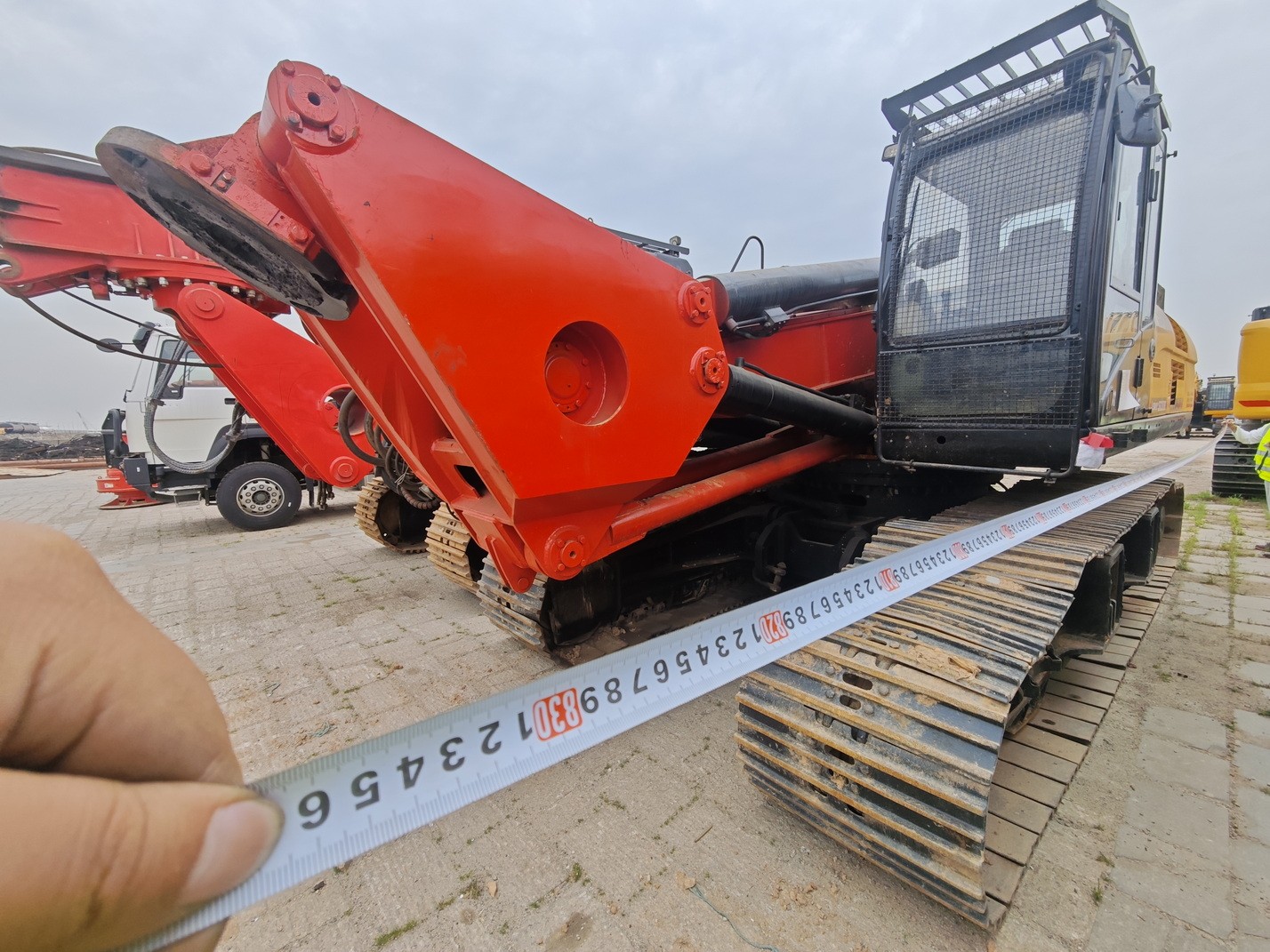
Before requesting a quotation from a logistics provider, please prepare the following information for the technical assessment:
- Measured overall external dimensions (L × W × H), including all protruding parts such as mirrors, exhaust pipes and ladders — do not simply copy the theoretical parameters from the brochure
- Measured gross weight of the complete machine (including accessories)
- Centre of gravity (COG) data; lifting point drawings are required for heavy-lift / flat rack shipments
- Confirmation of whether the equipment is self-propelled, and whether crawler equipment requires MAFI trailers
- A complete set of actual photographs: overall appearance of the machine, protruding parts, lifting points and battery compartment (new energy vehicles)
- The exact port of loading and port of discharge (do not give only the country)
- Whether over-dimensional heavy-haul inland transport is required after discharge, and whether road permits are needed
- For lithium-battery equipment, prepare the battery parameters for the carrier’s pre-approval
- For used machinery, confirm the year-of-manufacture restrictions and the fumigation and quarantine requirements of the destination country; some countries prohibit the import of used machinery, so complete the regulatory pre-review before booking
A frequent pitfall: many customers provide the theoretical dimensions and weights from a brochure, resulting in incorrect quotations, dead freight and refusal to load at the port. Actual measured physical data must be used.
V. Obtaining Your Project Feasibility Assessment
Whether you export buses and coaches, wheeled or crawler construction machinery, or generator sets and transformers, a clear service scope, carrying capacity and cost structure will help you screen logistics providers and prepare your project budget.
Our company holds NVOCC licence MOC-NV09157 and fully implements a six-step project logistics process: feasibility assessment, tailored solution, factory coordination, compliant shipment, end-to-end visibility and final delivery.
Submit your cargo parameters to obtain a free pre-shipment feasibility assessment and a tailored quotation.