Cultivating Deep Links, Bloom Delivers.

Solutions for Electric Bus/Chassis Export

Challenges with VIN, Registration Compliance and Delivery for the Middle East, Europe, Brazil and Africa
Home / Solutions For Electric Bus Chassis Export

The Middle East

Solutions for VIN, Registration and Compliance Challenges

Compliance Certification

Mandatorily obtain GCC (Gulf Conformity) certification and Saudi SASO certification. For the UAE, complete the ESMA high-temperature test for batteries and ensure charging piles meet IP67 protection standards. Adapt to the local 220V/60Hz voltage and issue an adaptation certificate. Provide complete sets of documents with officially certified Arabic translations.

Market Registration Access

For countries such as Turkey, require importers to establish more than 20 authorized service stations across 7 local regions in advance, and submit service station qualification and operation commitment documents as mandatory materials for import registration and customs clearance.

VIN and Customs Clearance

Ensure consistent VIN information across all documents, with customs focusing on verifying that vehicle specifications match certifications. Prepare supporting documents for battery safety and voltage adaptation in advance to address high inspection rates, avoiding improper review obstacles and hidden fees.

Europe

Solutions for VIN, Registration and Compliance Challenges

Compliance Certification

Mandatorily obtain ECE/E-MARK certification, WVTA (Whole Vehicle Type Approval) and eCall emergency call system certification. For electric chassis, complete additional EMC (Electromagnetic Compatibility) tests. Input component data into the IMDS system and declare SVHC (Substances of Very High Concern) in the SCIP database (mandatory notification for content >0.1%).

Access and Registration Compliance

Adapt to the EU CBAM (Carbon Border Adjustment Mechanism) by collecting supply chain carbon footprint data in advance. Provide a valid EU VAT number and complete import tax registration in accordance with local tax regulations. Meet RoHS component environmental restrictions.

VIN and Customs Clearance

Ensure strict consistency between VIN, component parameters and certification documents. With inspection rates exceeding 30%, fully retain technical data, carbon footprint records and substance compliance declarations to prevent cargo detention, heavy fines or even destruction of goods.

Brazil

Solutions for VIN, Registration and Compliance Challenges

Compliance Certification and Access

Obtain INMETRO mandatory certification 3–8 months in advance. Apply for an LI non-automatic import license prior to shipment (no shipments permitted without a license). Provide complete documents with officially certified Portuguese translations.

Coding, Tax Numbers and Registration Compliance

Accurately convert Chinese HS codes to Brazilian 8–10 digit NCM codes to avoid fines for coding errors. Verify the validity of the importer’s CPF (individual tax ID) / CNPJ (corporate tax ID) to prevent delays in manual review. Submit 5 bilingual English-Portuguese commercial invoices with standardized manufacturer and intermediary shipping information.

VIN, Cargo Value and Timeline Compliance

Maintain consistent VIN information across the entire document chain. Align with Brazilian customs minimum price thresholds and prepare trade contracts and payment vouchers to substantiate declared cargo values, avoiding penalties for underreporting. Strictly adhere to the 90-day customs clearance deadline upon arrival; overdue goods will be confiscated and auctioned by the government.

Inspection and Rectification

With inspection rates exceeding 35%, fully prepare battery test reports, INMETRO qualifications and coding correspondence documents in advance. Ensure components comply with local Brazilian safety and environmental standards to reduce rectification cycles and high associated costs.

Africa

Solutions for VIN, Registration and Compliance Challenges

Regional Compliance Certification

Obtain country-specific access certificates: PVOC for East Africa, CoC for West Africa, SONCAP for Nigeria. Ghana’s 2026 new policy requires GSA-approved conformity CoC plus third-party test reports. Complete carbon tax declaration documents for South Africa and prepare import/export permits for Egypt.

Vehicle Age and VIN Control

Strictly enforce the 2016 production cutoff and 8-year maximum vehicle age limit. Issue official VIN verification reports prior to export to eliminate assembled or refurbished vehicles, avoiding heavy fines, return shipments and placement on export blacklists.

Market Registration & CKD Model Compliance

Prioritize CKD (Completely Knocked Down) full-disassembly exports for countries such as Ethiopia, providing detailed parts lists and assembly instructions to qualify for tariff reductions. Prepare certified translations in local official languages (French, Swahili, etc.). Verify importers’ authorized distribution qualifications in advance to ensure post-clearance market launch and registration.

Customs Clearance Risk Mitigation

Prepare third-party cargo value appraisal reports in advance to address high inspection rates, inadequate customs expertise and repeated reviews. Standardize processes to avoid hidden port fees, improper obstacles and secondary inspections at inland transit checkpoints.

Africa

African Bus Delivery Risk List and Countermeasures

International Shipping

Red Sea route diversions, port congestion, hoisting damage, severe weather

Key Countermeasures:

Lock shipping schedules 3–6 months in advance, prioritize carriers with diversion experience. Engage local reputable agents to coordinate with ports. Purchase marine insurance. Reinforce body protection and critical components at the factory; conduct on-site supervision and evidence collection upon arrival.

Customs Clearance Compliance

Complex documentation, lengthy timelines, high tariffs, corruption, local inspections.

Key Countermeasures:

Engage professional agencies to process all mandatory documents, reserving review time in advance. Declare truthfully to avoid underreporting. Clarify tax liability allocation in contracts. Select compliant, reputable agents and retain fee receipts. Adapt to local inspection standards and deploy technical personnel for on-site support.

Inland Transit

Poor road conditions, long distances, shortage of trailers, numerous checkpoints.

Key Countermeasures:

Reinforce chassis protection and increase ground clearance at the factory. Avoid transit during rainy seasons; use four-wheel-drive trailers and rescue equipment if necessary. Secure regular trailer resources and plan optimal routes. Carry complete vehicle documents and engage local agents to coordinate checkpoints.

Climate Adaptation

High temperature, dust, salt spray corrosion, low-quality fuel, extreme temperature fluctuations.

Key Countermeasures:

Adapt vehicles for high temperatures at the factory with enhanced heat dissipation and upgraded air conditioning. Apply anti-rust and anti-corrosion coatings to the chassis. Modify engines for low-grade diesel and install fuel filters. Supply spare parts and fuel additives with the vehicles. Use temperature-resistant, aging-resistant rubber components and schedule regular replacements.

Financial Payments

Foreign exchange controls, slow payments, inefficient settlement

Key Countermeasures:

Specify L/C payment terms in contracts. Lock exchange rates or agree on fluctuation sharing. Require bank guarantees as payment security. Detail payment milestones, liability for breach of contract and fee allocation in contracts. Select partner banks with international settlement capabilities.

After-Sales and Spare Parts

Parts shortages, weak maintenance support, insufficient charging infrastructure, slow response.

Key Countermeasures:

Supply sufficient spare parts with each shipment. Establish local parts warehouses to shorten delivery cycles. Deploy on-site technicians to train local staff and provide remote diagnostics. Provide portable maintenance equipment with vehicles. Establish bilingual local after-sales outlets with defined response times and cross-border communication groups.

Political and Security Risks

Political instability, poor public safety, unauthorized operations, labor strikes.

Key Countermeasures:

Conduct comprehensive political risk assessments upfront and avoid high-risk countries. Purchase political risk insurance. Arrange security escorts and enhance anti-theft vehicle features. Train operators on standard operation and maintenance during delivery. Clarify liability for political unrest and strikes in contracts. Understand labor union activity patterns and develop contingency plans.

Certification Localization

Diverse certification requirements, incorrect steering/voltage configuration, non-compliant specifications, substandard emissions.

Key Countermeasures:

Initiate country-specific mandatory certifications 6–12 months in advance. Confirm left/right-hand drive and 12/24V voltage configuration in writing and double-check. Customize seats, doors and luggage compartments per local requirements and confirm in advance. Install noise reduction and exhaust treatment equipment at the factory; complete pre-delivery testing to ensure compliance.

Africa

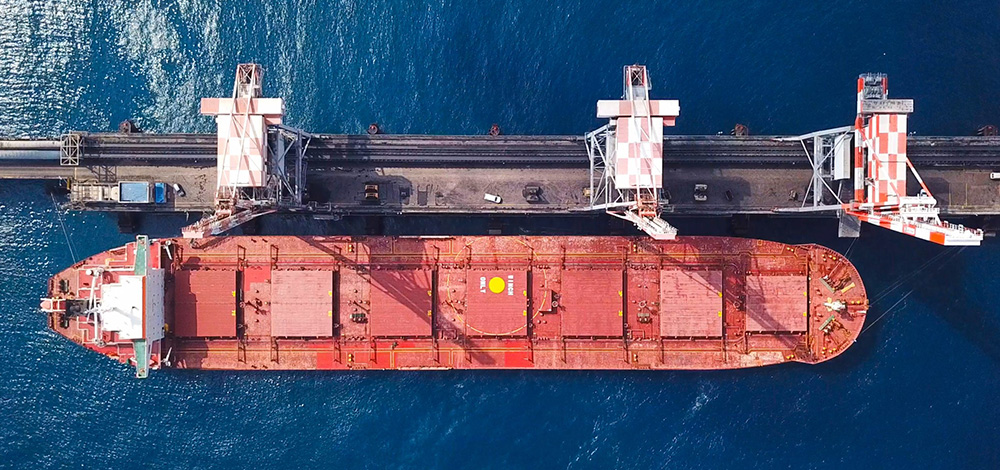
Bulk Carrier Shipment for Bus Exports to Africa: Damage Prevention and Compliance Operational Checks

01

Pre-Shipment Factory Protection

Wrap critical vehicle parts with bubble film and hard corner protectors; apply anti-scratch film to the body. Reinforce rearview mirrors and disconnect the vehicle’s power supply. For electric buses, limit battery charge to ≤30% and disconnect power to prevent moisture damage. Take photos and videos for record-keeping.

02

Loading at Domestic Port

Use dedicated slings for undercarriage lifting; never lift vehicles bare. Operate at low speed with dedicated supervisors present. Maintain adequate spacing in the cargo hold and keep vehicles away from heavy bulk cargo.

03

Cargo Hold Securement

Wedge all four wheels tightly with solid wood blocks; secure the chassis with 8 steel cables (horizontal and vertical) using factory mounting holes. Add buffer pads between vehicles and avoid positioning near the bow/stern. Retain records upon completion.

04

Marine Transit Monitoring

Archive documents, track sea conditions and retighten securing equipment if anomalies arise. Document all shipping milestones.

05

Unloading at African Port

Engage professional agents and use soft slings for slow unloading. Inspect for damage on-site and collect evidence. Arrange prompt inland transit and confirm compatibility of hoisting equipment in advance.

06

African Inland Transport

Use low-bed trailers, enforce speed limits and avoid poor roads. Survey routes for height/width restrictions and apply for oversize permits. Retain protective film until delivery; carry emergency tools.

07

African Customs Clearance Compliance

  • Certifications:Obtain COC/PVOC, ECTN/BESC, etc., in advance.

  • Emissions & Vehicle Age:Meet destination country standards (e.g., Euro 4 for Nigeria, used vehicles ≤15 years). No National III or lower diesel vehicles permitted.

  • Permits & Tariffs:Secure import permits and clarify tariffs in advance. Prepare dangerous goods declarations for electric bus batteries.

  • Document Consistency:Ensure uniform information across bills of lading, invoices, VINs, etc., to avoid fines.

  • Other Requirements:Purchase insurance, apply compliance labels, coordinate maintenance resources, mitigate security/rainy season risks, and ensure CKD import compliance.

Your Most Concerned Question Is as Follows

  • 106. 7 mandatory declaration elements for vehicle export clearance?
    Discover the 7 mandatory declaration elements for vehicle export clearance. Learn crucial details like vehicle brand, engine type, and VIN accuracy, and understand conditions that may prohibit export.
  • 105. How to get a vehicle export licence and what application conditions apply?
    Apply for vehicle export licences via the Ministry of Commerce platform. Used vehicles: one licence per consignment. New & NEVs: annual or batch applications. Licence info must match VIN, model and year. Exporters need valid qualifications; used vehicle firms also need filing. Licence data must match registration papers, and the correct commodity code is required.
  • 104. What preparations are needed for clearance once the vehicle arrives at the destination port?
    Prepare for vehicle customs clearance at the destination port. Discover the necessary documents like commercial invoice, packing list, certificate of origin, and country-specific certifications (PVOC/COC).
  • 103. Which documents are essential for the customs declaration of vehicle exports?
    Understand the vital documents needed for vehicle export customs declaration. Learn about export licenses, commercial invoices, packing lists, bills of lading, and other essential forms.

Is Your Equipment Situation More Complex?

Cultivating Deep Links, Bloom Delivers.